
Don’t let your design intent get scrubbed. After all, as an architect or interior designer, the primary value you bring to every project is your vision.
Whether you’re specifying a toilet partition system or a soap dispenser, the products you choose have a profound effect on the overall aesthetic and experience of the restroom for years to come.
When the product you specify causes headaches for the building owner — in the form of increased maintenance, cost-in-use and even excessive waste — you put your design intent in serious jeopardy. In many cases, a high-cost, high-labor system is specified by the architect; within a few months or less, the owner or facility manager will have already replaced the system with a more cost-effective (and often times, uglier) option.
In your upfront specification, avoid leaving the dispensing system up to the owner who may compromise your overall restroom design by affixing a plastic soap dispenser to the mirror, which can be unsightly and messy, resulting in water puddles on the counter. Further, once you leave the soap dispenser up to the owner, consider it “open season” on the rest of your design choices, from the toilet tissue dispenser to the towel dispenser.
The bottom line: Specifying an effective soap dispensing system should be the specifier’s responsibility. Over the long-term, this decision can be a make-or-break moment to preserve your design intent for years to come.
Why Switch Away from Proprietary Soap Dispensers?
Most modern soap dispensing systems utilize proprietary soap cartridges that can only function with manufacturer-provided plastic soap cartridges or bottles.
- Labor Intensive: Proprietary cartridges typically are attached to the dispenser beneath the washroom counter. Maintaining this system is somewhat labor-intensive for janitorial staff, who must reach and bend under the counter to change the cartridge. Over the lifetime of the product, this kind of maintenance can add up to hundreds of dollars in wasted labor costs.
- Wasteful Plastic: Proprietary soap cartridge systems also result in excessive waste because of their single-use cartridges or bottles that are discarded once empty.
- No Purchasing Freedom: Proprietary soap systems usually come with high-priced, multi-year consumables contracts, essentially locking facility owners into multi-year purchasing agreements.
For these reasons, proprietary systems are extremely prone to being replaced with other, less aesthetic products within just a few months of being installed. They’re simply too much trouble and too expensive for the facility to deal with. And when the dispenser goes, so does the lifetime of your integrated restroom aesthetic.
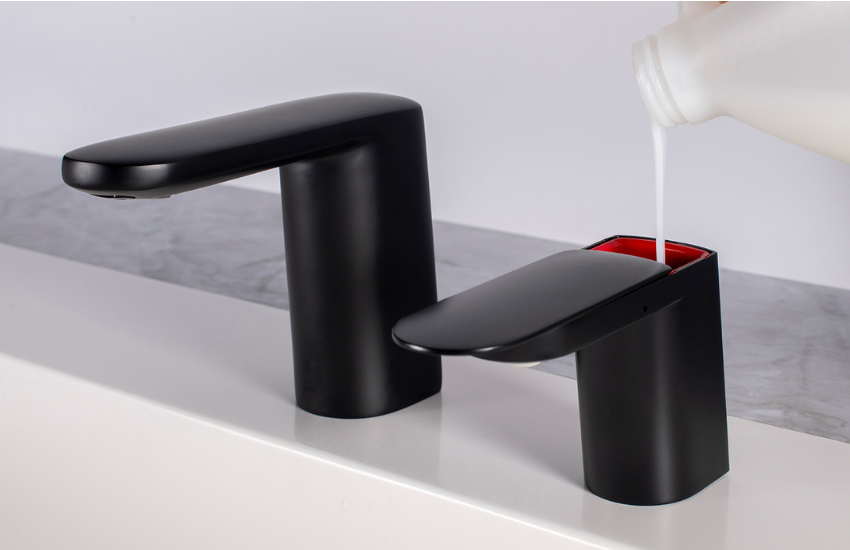
Universal Soap Systems Deliver Design Endurance
While proprietary soap systems limit purchasing flexibility for facilities and contribute to additional labor costs and post-consumer waste, non-proprietary soap dispensing systems are low maintenance for the owner—meaning your design is much more likely to endure.
3 Reasons to Specify Universal Soap Systems
- Flexibility: Facilities have the freedom to use any liquid or foam soap. The use of bulk jugs of universal or non-proprietary soap can provide facilitate as much as 80% cost savings on soap compared to proprietary cartridges or bottles.
- Sustainability: By refilling from a bulk soap jug, facilities can experience up to a 57% reduction in post-consumer waste.
- Serviceability: Some newer non-proprietary soap dispensers feature top-fill functionality, allowing janitorial staff to refill the dispenser through a convenient spout. With non-proprietary, open systems, maintenance staff can work more efficiently and comfortably, spending considerably less time bending beneath counters.
To further improve long-term cost savings use a foam soap system (whether automatic or manual), which can result in as much as 15% water savings compared to liquid soap.
The economical, sustainable benefits of non-proprietary systems increase the likelihood that the owner will stick with your specification, refilling and maintaining as-needed.
Calculate Your potential cost savings
The average American worker spends 40 hours per year in their workplace’s restroom—so when you conceptualize a restroom design, it’s within everyone’s best interest that you make it last.
Don’t break your clients’ bank and compromise your design intent with a restrictive soap dispensing system. Get it right the first time and don’t let your intent get scrubbed.
Download our free interactive cost-in-use calculator to estimate your potential savings. Learn more about Bobrick top-fill soap dispensers.