

When designing for LEED® certification, architects must make every square foot count, especially in the washroom.
From water savings to low-emitting materials, sustainable bathroom design is one way to accumulate LEED points.
By specifying the right products, communicating benefits to stakeholders, and keeping health and wellness front of mind, architects and designers can ensure their washrooms go beyond greenwashing.
Greenwashing vs. Authentic Sustainability: Why Verification Matters
Greenwashing happens when more effort is spent making a building seem eco-friendly than actually reducing the space’s environmental footprint. Doing so dilutes consumer trust and can result in specifying products that counter sustainability goals.
Pursuing established and recognized sustainability certification fosters environmentally conscious businesses and provides architects with opportunities to support their clients’ long-term business goals.
Clients look for environmentally friendly certification for many reasons, from meeting corporate sustainability goals to qualifying for tax credits. Sustainability attributes are also a driving factor in tenant satisfaction, according to an MIT Center for Real Estate survey in 2024. Keeping tenants happy boosts lease renewals and referrals.
In addition, businesses that actively pursue environmentally friendly practices are more likely to attract and keep younger workers. As Gen Z joins millennials in the global workforce, environmental policies are vital to younger workers. Studies show these generations will job hop if they are unhappy, and environmental concerns continue to influence their behavior.
With an eye toward authentic sustainability, architects and developers increasingly require environmental and health product declaration documentation.
What is an environmental product declaration?
An environmental product declaration, or EPD, is an independently verified document that provides transparent, standardized data about the environmental impact of a material or product across its entire life cycle.
Key components of an EPD are:
- Life cycle assessment that measures resources consumed and emissions generated from that product
- Product Category Rules that ensure similar products are evaluated using the same metrics
- Third-party verification by independent experts to protect against greenwashing
How EPDs Contribute to LEED Credits
Completing LEED certification requires scoring points for energy use, water efficiency, indoor environmental quality, and material selection. Specifying products backed by published EPDs contributes directly to material transparency credits.
What Is a Health Product Declaration?
While the EPD explores the product’s environmental footprint, a health product declaration details what chemicals the product contains and their potential health risks to building occupants or installers.
The Health Product Declaration Collaborative® created the HPD Open Standard, which sets the criteria for what qualifies for the designation. A manufacturer or third-party verifier then evaluates the material’s chemical composition and potential hazards; the document itself serves purely as a transparency disclosure and does not pass judgment on the product’s safety.
Verified in Practice: PRIVADA’s EPD and HPD
Bobrick is committed to environmental sustainability in global product design, manufacturing, and operations. Bobrick’s PRIVADA® Cubicles can help contribute to LEED certification.
PRIVADA Cubicles have been engineered to join luxury with environmental responsibility. In addition to offering elevated aesthetics, functionality, and privacy, Bobrick has completed the processes to obtain both an EPD and HPD for these cubicles.
PRIVADA Cubicles are made of:
- High-pressure laminates, which are durable and long-lasting
- Wood veneer laminates with natural wood veneers and a Class B fire rating
Either laminate option contributes to the unique and compelling sustainability story of these cubicles. Both deliver lasting durability, which reduces replacement frequency and life cycle waste, directly supporting LEED’s materials and resources categories.
Specifying for Sustainable Operation
Cubicles are just one part of sustainable bathroom design. Bobrick’s core accessories are fabricated using 50% to 70% postindustrial stainless steel, which actively contributes to recycled content credits on LEED projects.
Soap and Paper Systems that Cut Waste
Specifying single-use proprietary soap cartridges generates excessive plastic waste while locking buyers into a single soap vendor. Additionally, these proprietary systems can make maintenance more difficult.
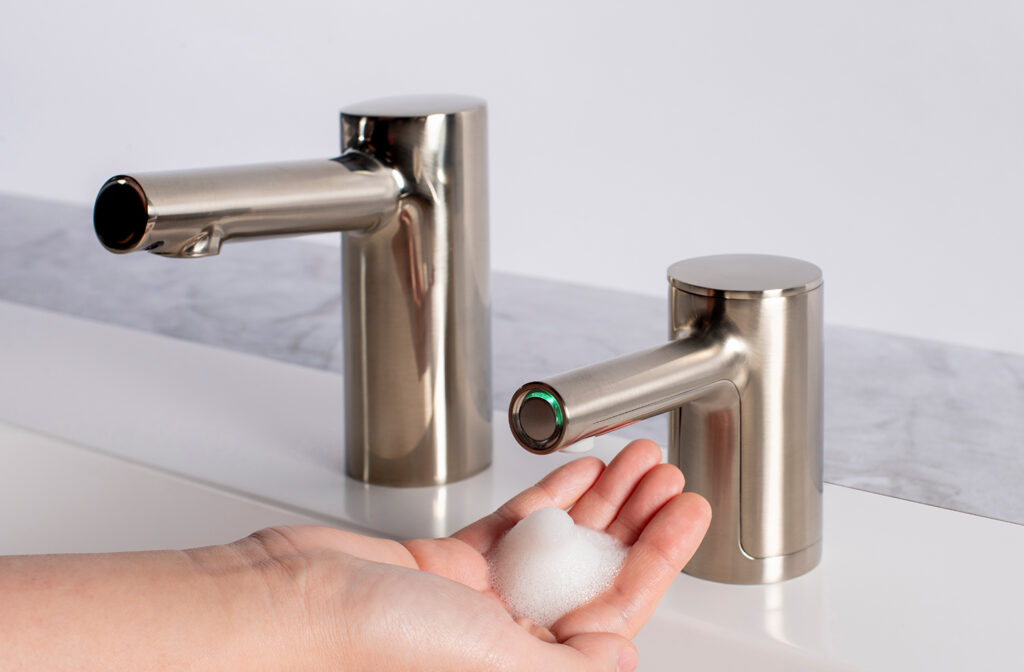
Streamlined, top-fill designs, such as the Fino Collection, simplify maintenance and use bulk soap to improve efficiency. In addition, dispensers with foaming hand soap allow for greater hand coverage, reducing product waste and achieving the ideal hand wash without excess resource consumption.
Beyond soap efficiency, Fino faucets conserve water due to the settings for auto water time-out durations, water shut-off delay, metering mode, and auto-flush.
Paper towel dispensers are another common source of inefficiency, especially when the design results in a “stub roll.” When a portion of unused paper towels is discarded, stub rolls lead to excess waste.
Additionally, dispensers without portion control features can result in excess paper towel usage by patrons. Specifying dispensers with adjustable pull lengths and other portion control features such as TowelMate® can curb wasteful behavior.
Hand Dryers, Touchless Fixtures, and Water Savings
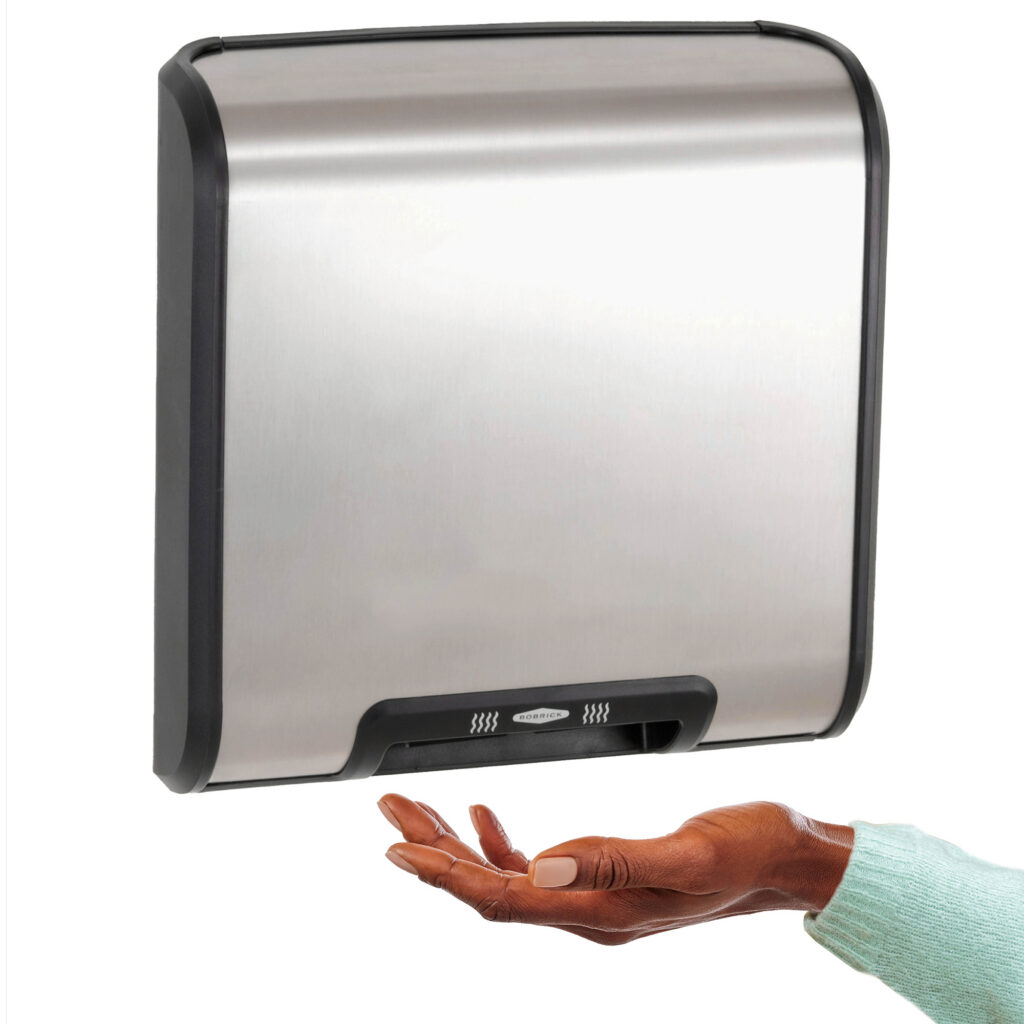
While hand dryers solve the sustainability challenge of waste, other factors come into play. For example, wattage and functionality of hand dryers, and other accessories, can lead to high energy costs, especially with high-speed hand dryers. It is important to specify hand dryers with low wattages and longer life expectancies.
Touchless accessories have virtually become standard to sustainable restroom design, due to their hygienic function and ability to minimize water and consumable usage.
Advanced touchless faucets, such as the Designer Series, further optimize water savings through vandal-resistant, low-flow 0.5 GPM non-aerated sprays and hidden sensor activation that shuts off water flow immediately when hands leave the detection zone. Below-the-counter electronic controls also allow facilities to program custom water time-outs, metering modes, and auto-flush parameters to actively prevent excessive consumption.
However, overall energy requirements of any washroom accessories that run on batteries or AC power usage should be considered during specification.
Communicating Verified Value to Stakeholders
Innumerable building products are marketed as sustainable. Understanding and communicating the operating value of each product, including measurable cost and resource savings, can be the deciding factor in securing the specification.
As the key decision-maker in product specification, it is standard to provide support materials such as building information analyses, technical data, and compliance documentation to support specification decisions. To avoid stakeholders such as contractors and facility managers challenging your selections as the architect, outline and clearly communicate energy savings.
The manufacturer’s representative should be able to provide support in communicating the benefits of chosen products. These representatives serve as consultative educators, providing resources to help specifiers defend their choices.
Also, Bobrick provides Cost Saving Calculators to make it easy to show the actual operating costs. Use these tools to show how Bobrick’s universal soap and paper towel dispensers compare to competitors based on soap and paper product purchases and usage levels.
Earn CEU Credit
Hygiene plays a critical role in LEED certification, primarily within the indoor environmental quality and operation and maintenance categories. With Bobrick’s continuing education course, Reimagining Restrooms for Human Health & Wellness, you will:
- Explore the hygiene challenges for post-COVID-19 restrooms
- Evaluate product strategies for maximizing hygiene
- Examine space planning strategies
- Assess design strategies to enable proactive sanitation, cleaning, and maintenance for reliable operation and optimal hygiene
Complete this course to earn 1 AIA LU/HSW credit (Course Code: BOB1315) or 1 IDCEC HSW/Building Code credit (Course Code: CEU-113508).
Schedule a learning session to get started.